Direct Drive & Mono‑radial Turbine Power Take‑Offs
Open‑Source Power Take‑Off Technologies for Wave and Tidal Energy
Innovating Marine Renewable Energy
Hanna Wave and Tidal Power Drives was founded in Coos Bay, Oregon in 2010 by inventor John Clark Hanna. Over the past decade, Hanna has designed innovative Power Take‑Offs (PTOs) for international and domestic wave and tidal energy developers. Two patents (U.S. 8,358,026 and U.S. 8,745,981) have been granted and sold.
Now, in 2026, Hanna is sharing a new open‑source design for a dual PTO surface buoy. All the Hanna designs are open-source and are meant to accelerate progress in the marine renewable energy (MRE) field. These technologies are being placed in the public domain to encourage global collaboration and help stimulate the emerging Blue Economy.
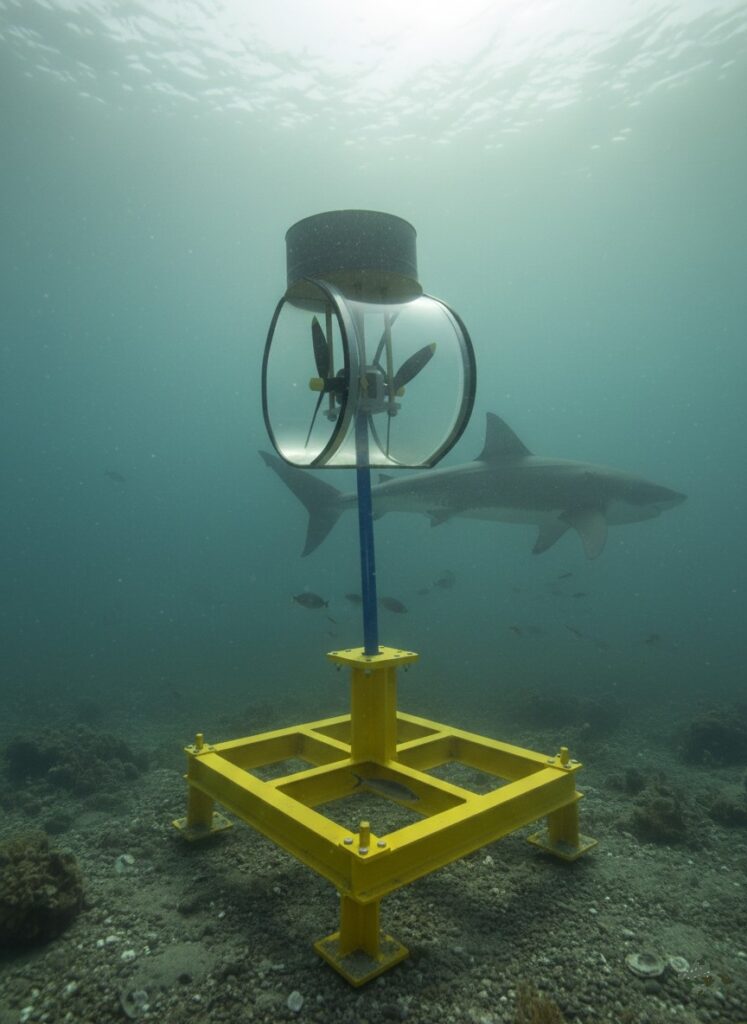
Both technologies described below were initially meant to become U.S. Utility Patents. But the patent process is ponderous and time consuming and time is running out. Climate Change is now at a tipping point. It may already be too late to reverse the pending catastrophe. So, I have decided to offer both of my inventions as 'open-source' technologies. With the appropriate citation, they are freely available to developers around the world. The coaxial drivetrain is new for wave and tidal energy, but the converters that are driven by my new coaxial system are common, proven technologies. The second open-source technology being offered, is my Monoradial Drive. It has been validated by a DOE-funded study using computational fluid dynamic analysis. Both PTO systems have the potential to reward anyone who invests time and resources to bring these ideas into the global market. It is my hope that these concepts will be adopted by others who feel as I do. We have to act now in order to protect Earth's ability to sustain life.
I will consult with any developer to help make this happen.
The Tidal‑Wave Drive
Dual Rotor, Coaxial Powertrain for Wave and Tidal Applications
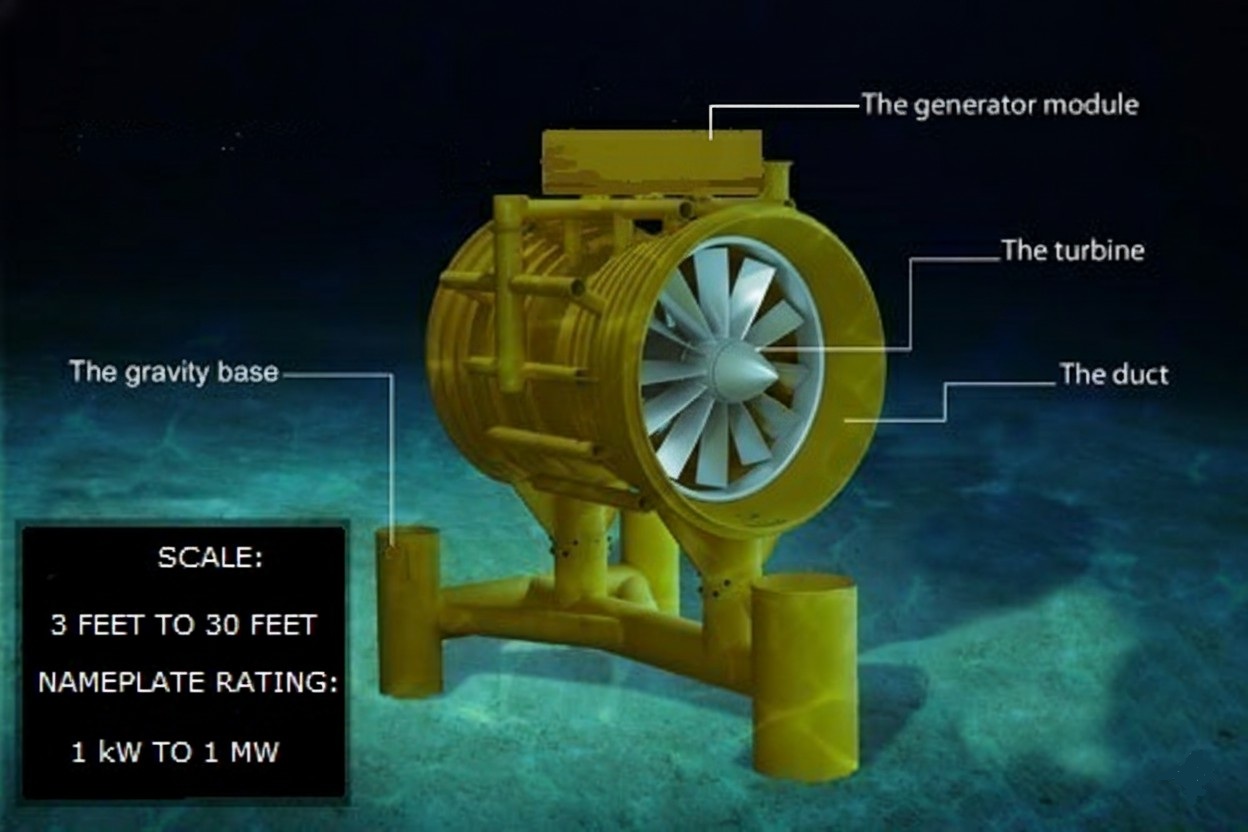
The Tidal‑Wave Drive is a novel dual rotor, coaxial powertrain being offered in the public domain. This versatile PTO supports four major types of wave and tidal energy conversion technologies:
- Floating and subsurface buoys
- Jetty‑based OWC air turbines
- Bi‑directional tidal turbines
The dual rotor turbine is a proven design validated at four universities.
Most importantly, the Tidal‑Wave Drive is simple — simplicity of design ensures reliability and cost‑efficiency. Existing MRE systems are often over‑engineered, driving up cost and reducing competitiveness. The harsh marine environment demands an uncomplicated approach.
Because Climate Change is an existential threat, a decision has been made not to patent the Tidal‑Wave technology. It is offered as an open‑source design — free, with attribution, to all MRE developers and researchers worldwide.
The Mono‑radial Wave Turbine
A Self‑Rectifying Turbine for Wave Energy Conversion
Another open‑source technology available in the public domain is the Hanna Mono‑radial wave turbine. This device was validated in a DOE‑funded CFD study, confirming its design as a self‑rectifying turbine.
It is available to global wave energy developers and manufacturers. The fractional‑scale version provides low‑wattage power suitable for charging batteries on extended‑mission data collection or surveillance buoys, while a full‑size unit can generate utility‑grade power.
The Mono‑radial wave turbine harvests energy from the up‑and‑down movement of ocean waves using the OWC (Oscillating Water Column) principle — one of the most mature and well‑studied wave conversion systems in the marine energy sector.
Both the open‑source Mono‑radial turbine and the coaxially‑driven turbine can be installed on breakwaters, jetties, or floating platforms. Environmental studies on existing shore‑based OWC installations have produced FONSI (Findings of No Significant Impact), confirming no interference with marine life, maritime traffic, commercial fishing, or recreation.